
Recruitment is often treated like a fire alarm.
Someone hands in their notice. A gap appears. A team starts stretching. Service begins to wobble. Then suddenly recruitment becomes urgent.
The problem is that by the time hiring feels urgent, the business may already be paying the price.
In July 2026, many UK businesses are operating in a cautious labour market. ONS figures released in June showed vacancies falling to 707,000 in March to May 2026, the lowest level since early 2021. That does not mean hiring has become easy. It means employers are being more selective, candidates are moving carefully, and smaller businesses need to think harder about when and how they recruit.
That is why recruitment should not sit at the bottom of the to-do list. It should be part of your growth strategy.
When recruitment is reactive, the business usually feels it in four places.
First, service quality. An empty role rarely stays empty on paper. Someone covers the calls, the bookings, the nursery ratios, the admin, the customer follow-up or the client work. At first, everyone pulls together. Then standards start to slip.
Second, team morale. Good people will help when a colleague leaves, but they notice when temporary pressure becomes normal. If the same reliable employees are always asked to absorb the gap, they can become tired, frustrated or disengaged.
Third, momentum. Growth does not just depend on sales. It depends on having the people to deliver what has been promised. A business can win the work and still struggle if the team is already stretched.
Fourth, decision-making. Panic recruitment often leads to compromise. The advert goes live quickly, but it is really just a copied job description. Applications come in, but there is no time to screen properly. Interviews are squeezed around an already full diary. The risk of a poor-fit hire increases.
Planned recruitment feels different.
It starts with a simple question: what roles will we need before growth creates pressure?
That question changes the whole conversation. Instead of asking “who can we get quickly?”, you can ask:
What skills are we missing?What type of person will fit our values?What pressure points are likely to appear in the next three to six months?Where would one great hire create the biggest positive impact?
This is where Green Bee’s approach is different from “just another agency”.
We do not want to throw CVs at your inbox and hope one lands. Our best work happens when we understand your business, your team, your culture and your actual hiring challenge. Through a discovery-led approach, we look at what is happening now, what it is costing you, and what needs to change day to day when the right person is in place.
That is why we talk about being a growth partner.
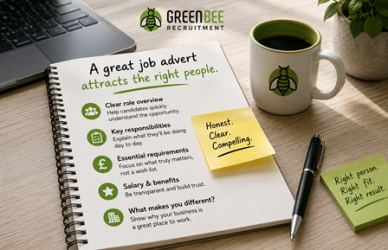
A growth partner is not just there when the vacancy has become painful. A growth partner helps you plan, position and move with confidence. That could mean creating a job advert that speaks to the right candidates, widening your reach, screening people properly, coordinating interviews, supporting compliance or keeping in touch after someone starts.
It also means being honest.
Sometimes the role needs reshaping. Sometimes the salary needs reviewing. Sometimes the advert is not attracting because it is written like a task list instead of an opportunity. Sometimes the biggest barrier is not candidate availability; it is a slow process, unclear expectations or the fact that recruitment keeps being pushed behind “more urgent” work.
The businesses that recruit well in 2026 will not necessarily be the ones shouting the loudest. They will be the ones that understand people planning is business planning.
Your next hire could protect service.Your next hire could release pressure from your best people.Your next hire could improve customer experience.Your next hire could unlock the growth you are already working hard to create.
But only if recruitment starts before the panic.
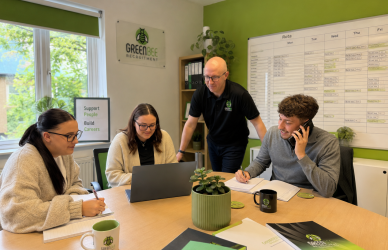
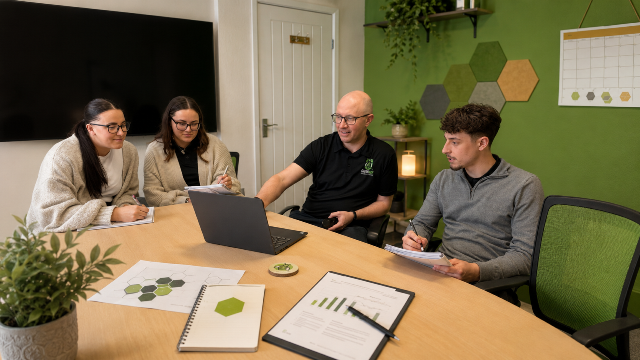
At Green Bee Recruitment, we believe hiring should feel exciting, not stressful. We are a family-run, values-led team that works alongside businesses as an extension of their team. Our role is not just to fill a vacancy. It is to help you make a better people decision, with less stress and more confidence.
So, before the empty chair starts costing you momentum, ask yourself:
Who will we need next? What happens if we wait? And what could change if we got the right support now?
If growth is on your agenda this year, recruitment should be on it too.